
Filters








The stitch is the look
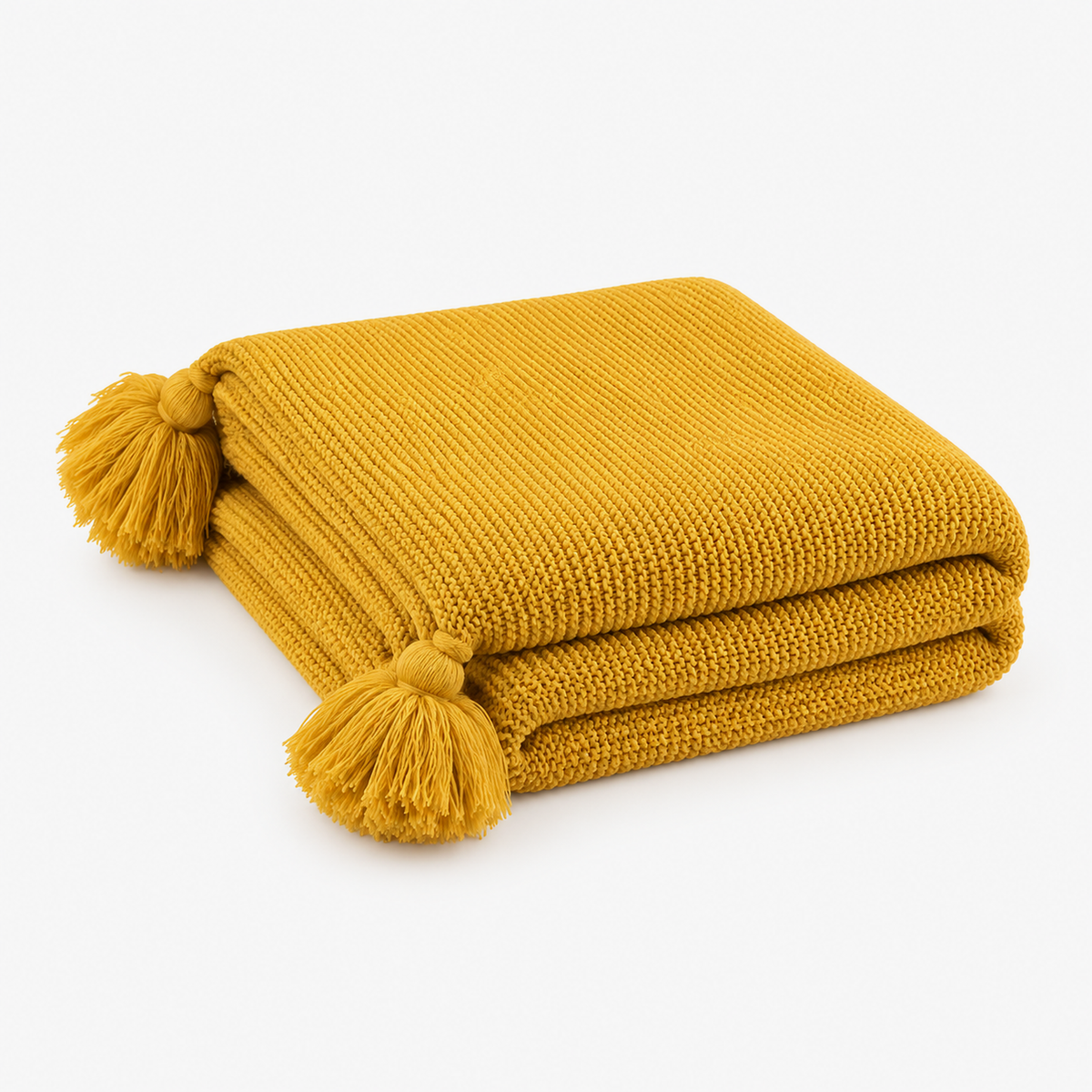
Chunky knit. Thick yarn in big, open loops. It is the one you notice from across the room, and it is heavy for its size. It suits a plain sofa or a simple bed, where nothing else competes with it.
Cable knit. Raised columns that twist over one another, the fisherman pattern from old sweaters. Finer than a chunky knit, with a lot of texture up close and a quieter look from a distance.
Seed stitch and plain knits. A small, even surface with no pattern to speak of. The calmest of the knits, and the easiest to put with patterned cushions or a busy rug.
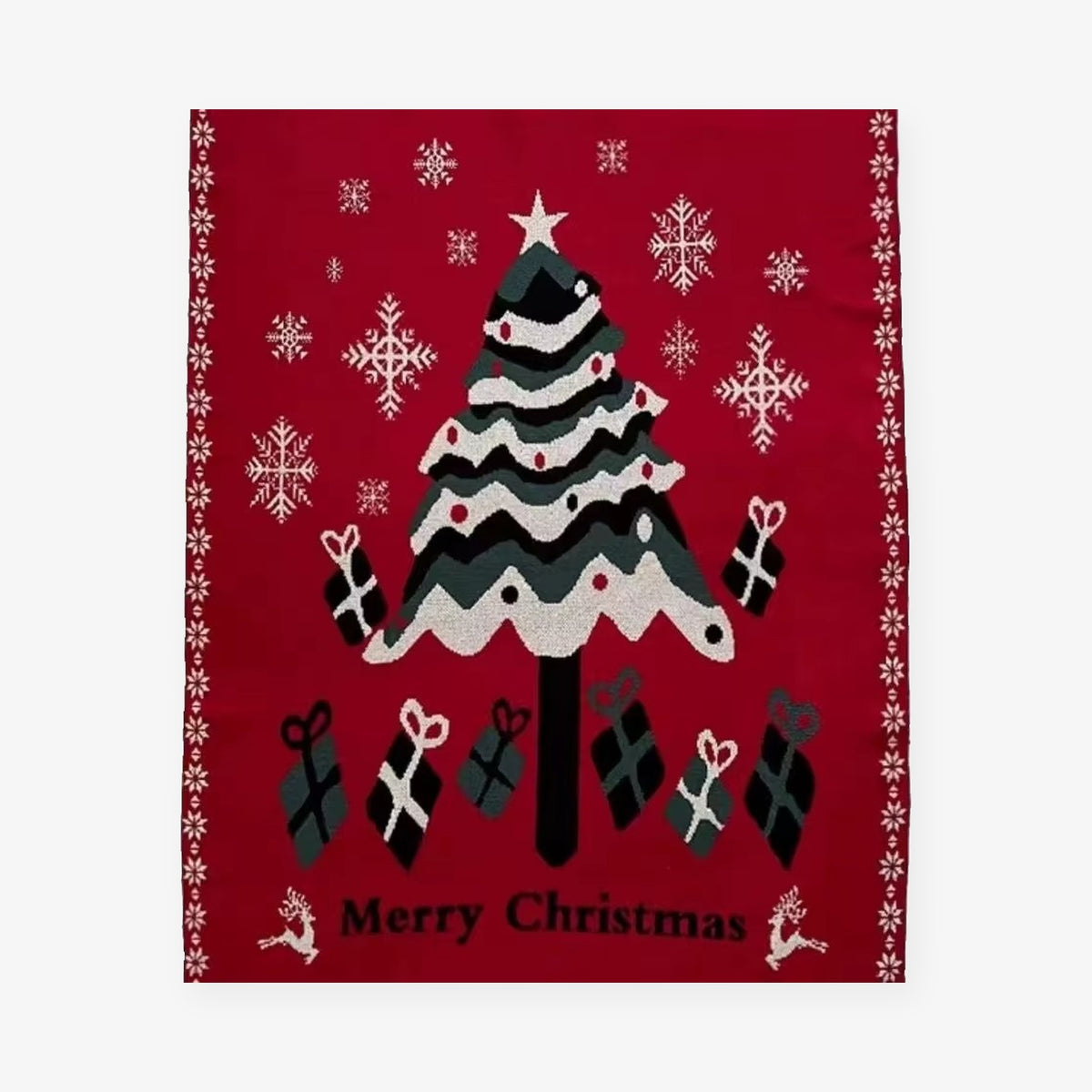
Jacquard knits. The pattern is knitted in rather than printed on: checks, stripes, trees and snowflakes. Because the colors are part of the yarn, the pattern shows on both sides, usually reversed on the back. Christmas knits are often made this way.
The yarn: acrylic, polyester, chenille and feather yarn
Knit throws today are usually acrylic or polyester rather than wool, and the product page names the fiber where the maker gives it. Both hold their shape, keep their color through washing, and do not need the care that wool does. Acrylic has a dry, wool-like hand; polyester is often spun to feel smoother.
Chenille is not a fiber but a kind of yarn. Short threads stand out all around a core, so a chenille knit has a velvety surface instead of a smooth one, and it looks deeper in color. Feather yarn works the same way with longer, fluffier threads that half hide the stitches.
Some knits have a sherpa back: a knit face for the look, and a short curly pile behind it for warmth. Those are noticeably thicker and warmer than a knit on its own, and they lie flatter.
Warmth and weight
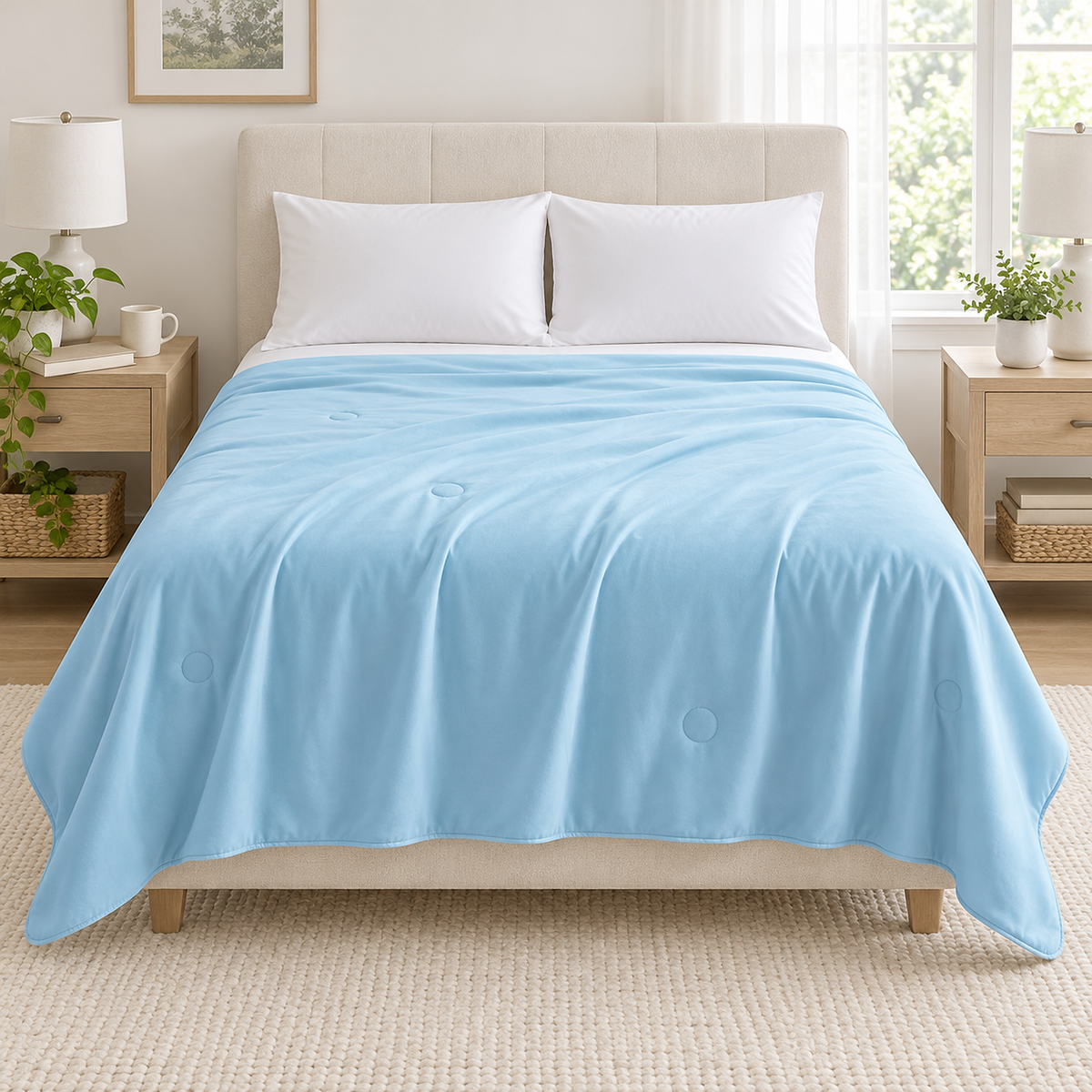
A knit lets a little air through its stitches, so it feels lighter and less stuffy than a pile blanket of the same size. That is why many people keep a knit on the sofa all year. A chunky or chenille knit is heavier and feels warmer; a fine knit is the one for a cool summer evening. Where the maker states a weight, it is on the product page.
If warmth matters most, look at sherpa, faux fur and plush among all our blankets and throws, or choose a knit with a sherpa back.
Size: a throw, or bigger
Knit throws are usually around 50 by 60 inches: enough for one person on a sofa, or folded across the foot of a bed. Some designs also come in a larger size that covers more of a bed. The size is on the product page in inches and centimeters, each size listed on its own.
Washing a knit, and snags
Care varies more with knits than with any other blanket, so read the Care tab on the product page. Many go in the machine cold on a gentle cycle; some want a mesh bag, and some want drying flat instead of the dryer. Washing in a mesh bag on its own is the safe choice for any knit.
Big open loops can catch on rings, zips, Velcro and a pet's claws. If a loop pulls, ease it back along the row from both sides rather than cutting it; the stitch closes up again.
Styling a knit throw
On a sofa, fold the throw in thirds and hang it over one arm, or drape it from one corner of the backrest so the stitch shows. On a bed, fold it across the bottom third. A textured knit looks best against smooth fabrics, linen, leather or plain cotton, where the stitch has room to show.