
Filters







Travertine, marble and alabaster are not the same stone
People often search for alabaster when they mean the look of pale stone on a wall. It is worth knowing the difference before you buy.
Alabaster is translucent. Light passes through it, which is why an alabaster shade glows from inside. Travertine and marble do not let light through in the same way, so a sconce made from them is designed around the stone instead of behind it.
That is what you will find here. Travertine is a warm, porous stone with small pits and bands of tone across its surface. Marble is cooler and smoother, with veining. There is no alabaster on this page.
How the light and the stone work together
Because the light does not shine through the stone, each design puts it somewhere the stone can catch it.
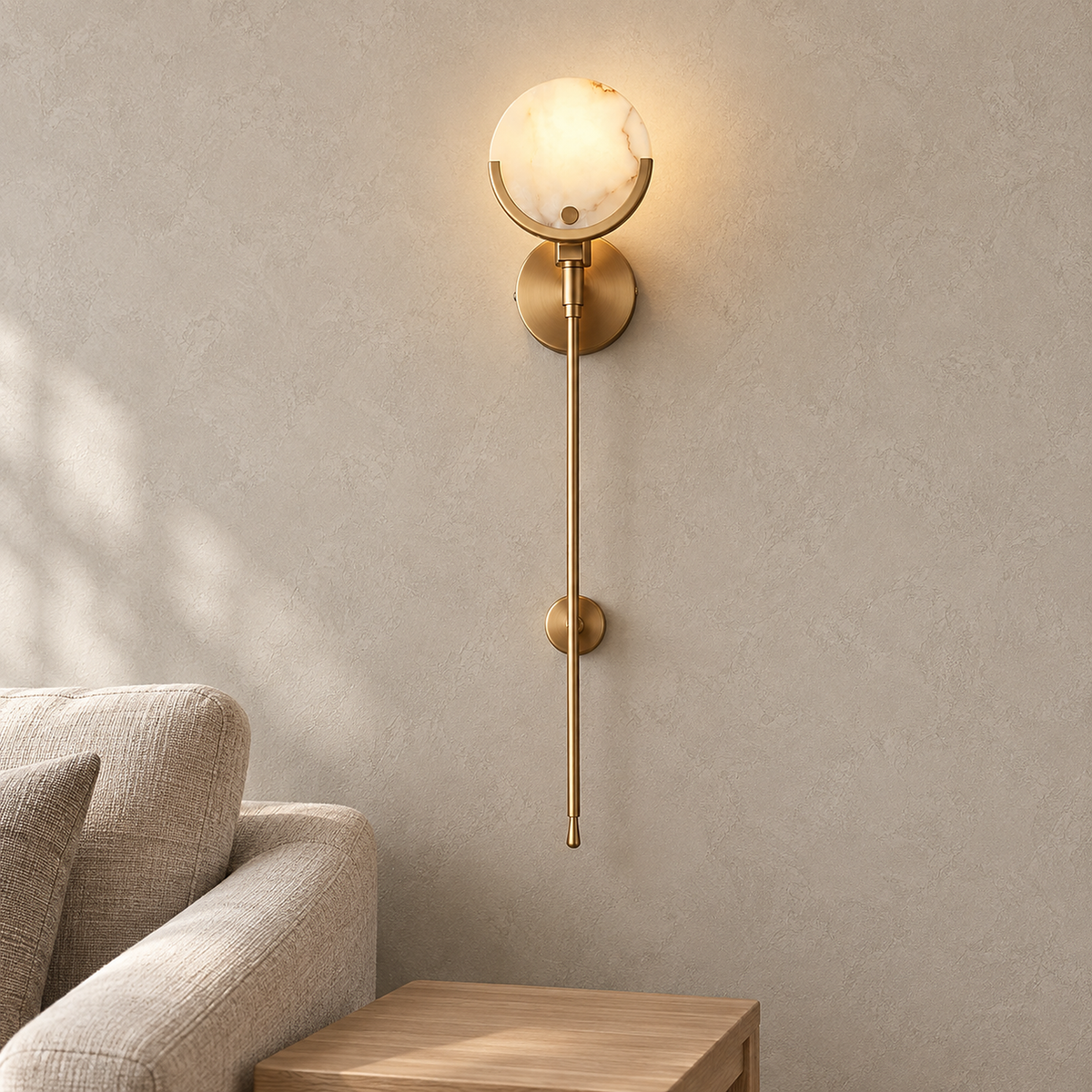
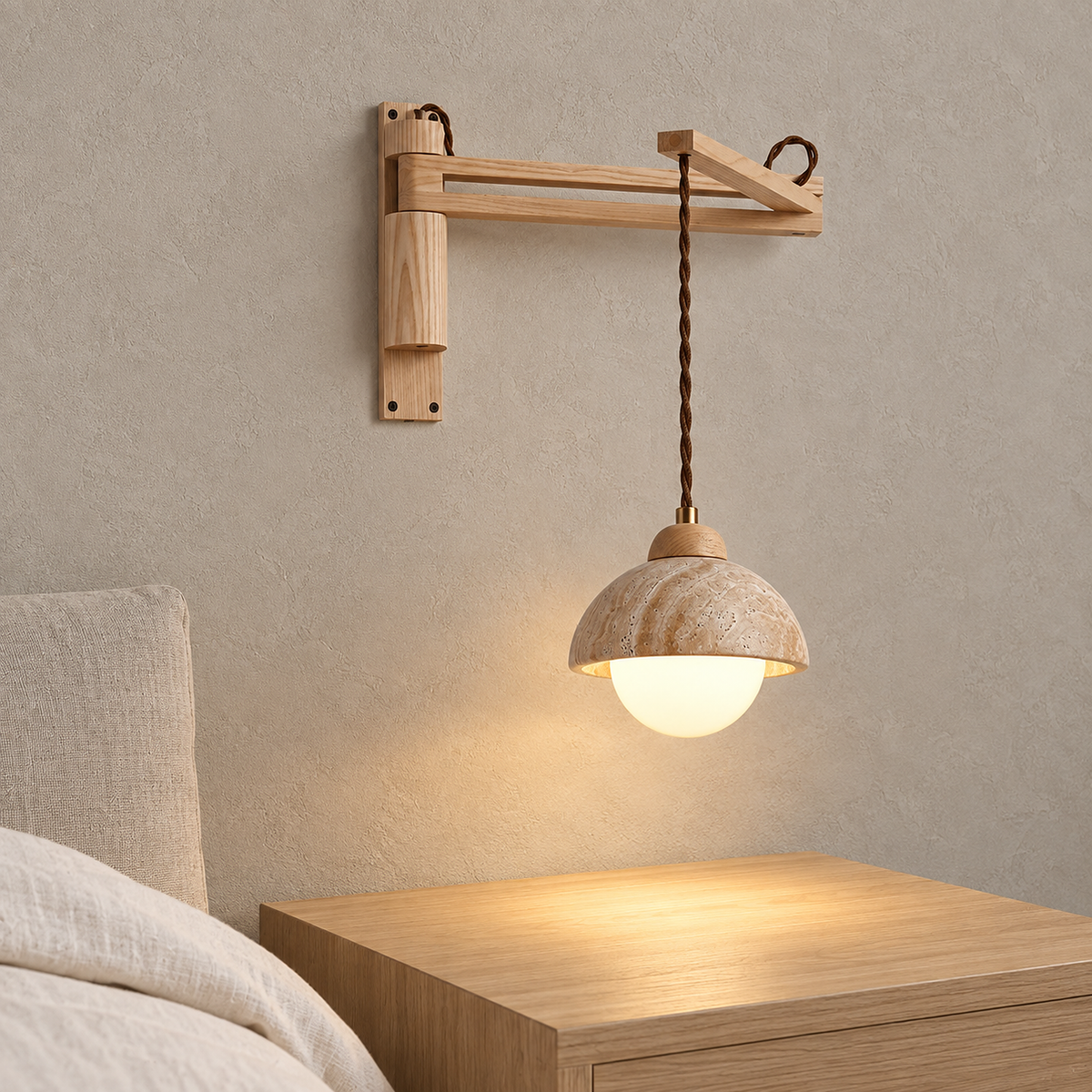
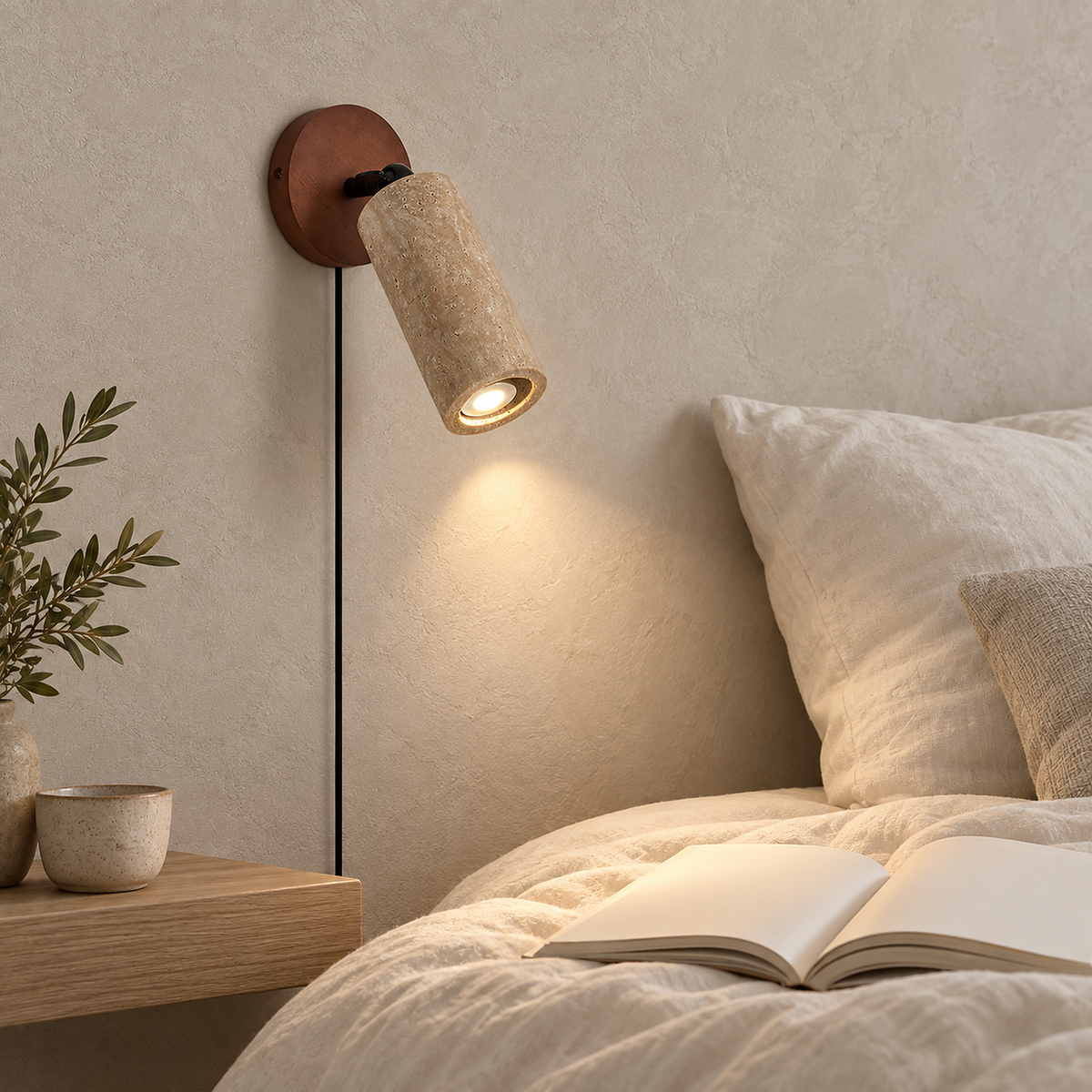
A dome of travertine hung from an arm sends its light straight down and keeps the glare inside the shade. A stone disc lit from behind throws a halo onto the wall around its edge. A white globe set against a stone plate lights up the surface around it, so the texture shows even at night.
In daylight it works the other way around. Switched off, a stone sconce still reads as an object on the wall, which is a large part of why people choose one.
No two pieces are alike
Travertine and marble are natural stones, and they behave like it. The pits in travertine, the banding of its color, the veins in marble: all of it varies from one piece to the next, and the one that arrives at your door will not match the photographs exactly.
Most people buy stone for exactly that reason. If you are fitting a pair, expect two sconces that are clearly related rather than identical, and put them where the difference reads as character, either side of a bed or a mirror, rather than side by side on one short wall.
What the stone sits with
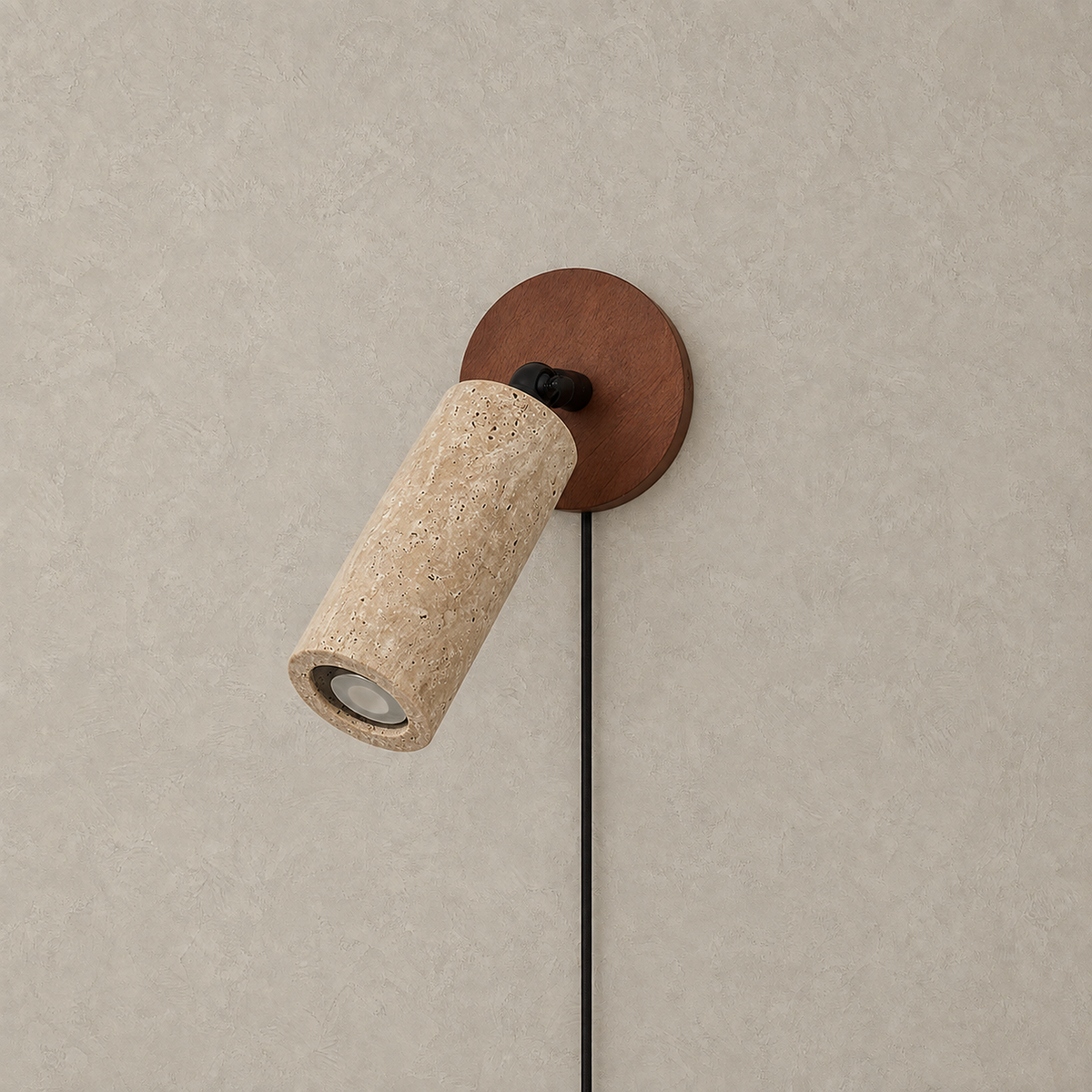
Very few of these are stone alone. The stone is usually the shade or the face, and the rest of the fixture is wood, metal or both.
Walnut and lighter wood tones are the most common partner, and they suit the warm color of yellow travertine. Brass and gold arms push the look toward something richer. Black metal makes it plainer and more graphic, and on one design the travertine itself has a matte black coating.
Stone without an electrician
Stone sconces have a reputation for being wired into the wall, and many of these are. Their product pages say so, and they need a junction box and usually an electrician.
Some are not. A plug-in stone sconce runs its cord to an ordinary outlet, which suits a rental or a wall with no box behind it, and there are rechargeable ones here too, with no cord at all.
Check the power line on the product page before you choose. It is the difference between fitting a sconce yourself in an afternoon and booking someone to do it.
Looking after stone
Travertine and marble are both soft, porous stones. Dust them with a dry, soft cloth, and keep sprays, oils and acidic cleaners off the stone, since they can mark the surface. None of these is rated for damp or wet locations, so keep them to indoor, dry rooms, not a shower wall or outside.