
Filters


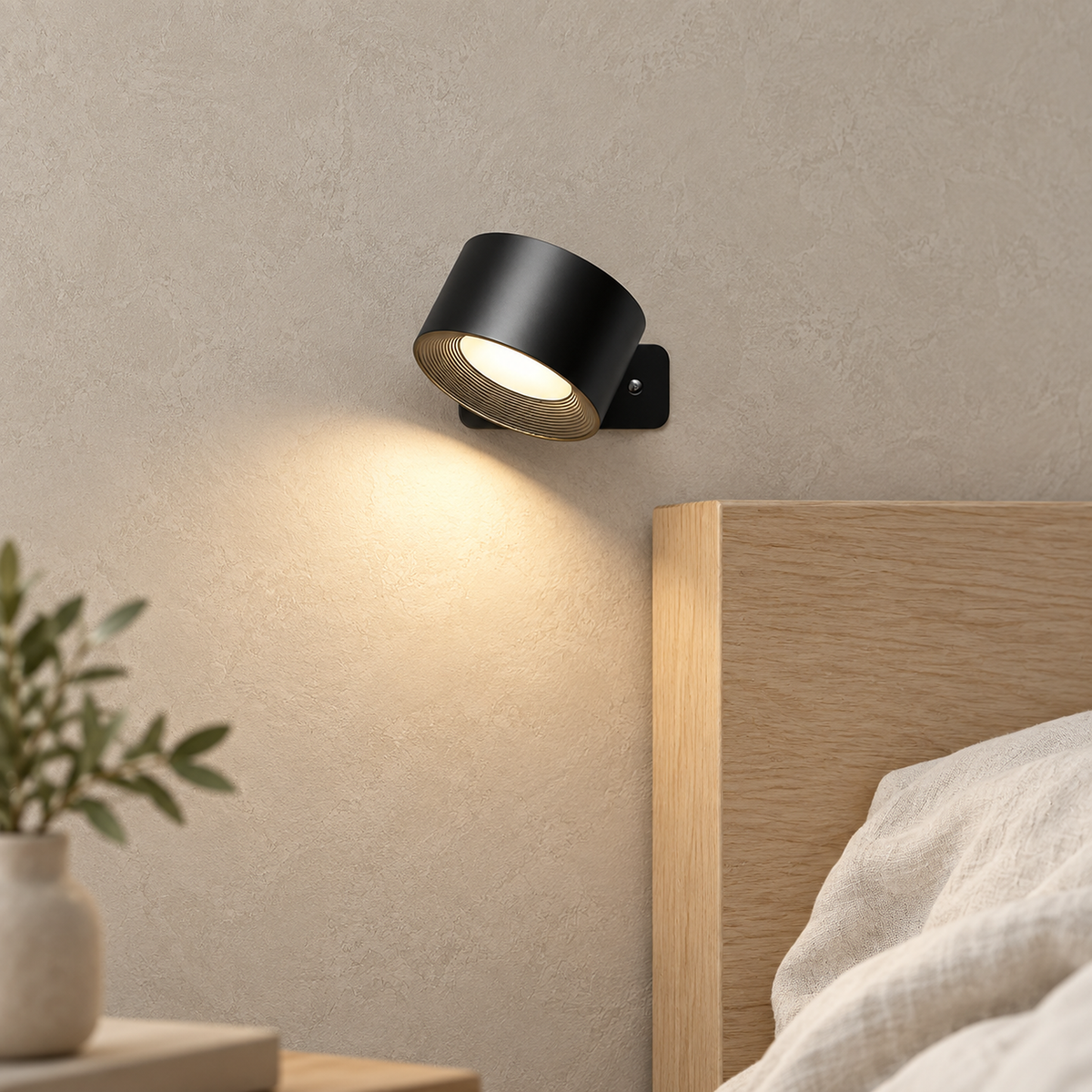


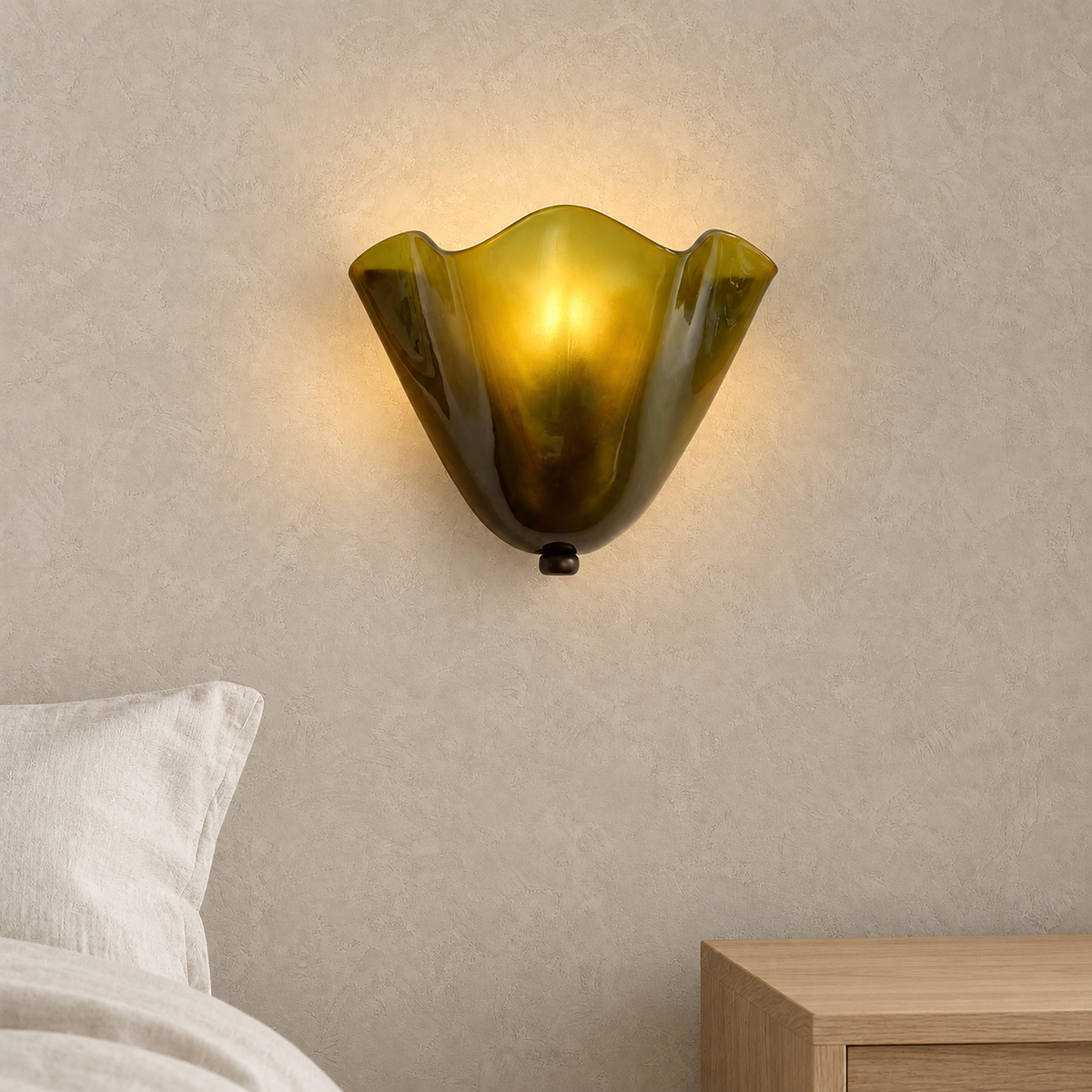


Height is the whole decision
Everything else about a bedroom sconce is preference. The height is the one thing that decides whether you end up using it.
The test is simple: it should land at reading height when you are sitting up in bed, not standing beside it. Hold the fixture against the wall, sit on the bed, and mark the spot from there. Fix nothing until you have.
One thing catches people out. On a lot of these designs the shade sits at the top of the stem rather than in the middle, so the light ends up higher than the bracket you are holding. Hold it lower than you first think.
Too high and the bulb is in your eye line while you read. Too low and the light lands on the sheet instead of the page.
If you are putting one on each side, mark the same height on both walls before you drill anything. Two sconces at slightly different heights is the kind of thing you cannot stop seeing once you have noticed it.
It gets the nightstand back
This is the real reason most people move from a table lamp to a wall light, and it is worth being plain about it: a bedside table is small, and a lamp takes most of it.
Put the light on the wall and the surface underneath goes back to being a surface. A book, a glass of water, a phone, reading glasses — the things that were competing with the lamp base.
How clean it looks depends on how it is powered. A hardwired sconce leaves nothing at all: no cable behind the table, no plug in the socket. A plug-in one still runs a cord down to the outlet, though it runs behind the table rather than across it. A cordless sconce has nothing hanging off it and needs no outlet nearby at all.
Reading without waking the person next to you
A bedside light has a harder job than a room light. It has to put enough light on a page to read by, and keep it off the pillow beside you.
The designs that do this well have a head you can aim. An adjustable spotlight head points the beam down at the book and leaves the rest of the bed dark. Heads on a ball joint do the same thing with more freedom. An arm that folds out from the wall goes further again — it brings the light over the page rather than lighting it from the side.
A fixed shade throws wider by design. That is right for ambient light and wrong for reading at midnight next to someone asleep.
Dimming helps more than people expect. The lowest setting on many of these is enough to read by once your eyes have adjusted, and it is far less disruptive than full output.
The switch has to work from the pillow
A bedside light that you have to get up to turn off is a bedside light you will stop using.
There are three ways these switch, and they feel different in the dark. A touch sensor on the body is the simplest: you reach out, find the fixture, tap it. Nothing to aim, nothing to lose. Many of them dim on a long press as well.
A remote matters more than it sounds, and it matters most when the sconce is high, above a headboard, or fixed out of arm’s reach. It is also the only one of the three you can use without sitting up.
An inline switch on the cord is what plug-in sconces commonly use. It works well, but the switch lands wherever the cord lands, so think about where that is before you mount the fixture — behind the table is tidy, but it is also a reach in the dark.
Warm light at night
Color temperature matters more beside a bed than anywhere else in the house, and the answer is warm.
Many of these run at 3000K, and on some it is fixed there, which is a design decision rather than a limitation. Warm white at a low level is what a bedroom wants in the hour before sleep.
Others are adjustable across the range, usually 3000K warm through 4000K neutral to 6000K cool. The cool end is genuinely useful — at a dressing mirror, on a desk — it is just not what you want at eleven at night. If you buy an adjustable one, you will set it warm and leave it there most of the time.
The product page states which, where the manufacturer gives the figure.
One, or a pair
A pair either side of the bed is the arrangement most people picture, and it is the reason several of these are sold as a set of two rather than singly.
A pair is not only symmetry. It means each side can read without the other side deciding when the light goes off.
One works when the bed sits against a wall on one side, or in a smaller room where two would be too much. A single sconce is also the more forgiving choice — a pair has to be level with each other as well as at the right height.
Before you buy, check three things
Where the light actually sits relative to the bracket. That decides your mounting height, and it is the mistake that is hardest to undo.
How it switches, and whether that switch will be within reach from where your head goes.
Whether it needs an electrician. Many of these do not — they run on a rechargeable battery or plug into a socket — but the hardwired ones do, and the product page says so plainly.