
Filters


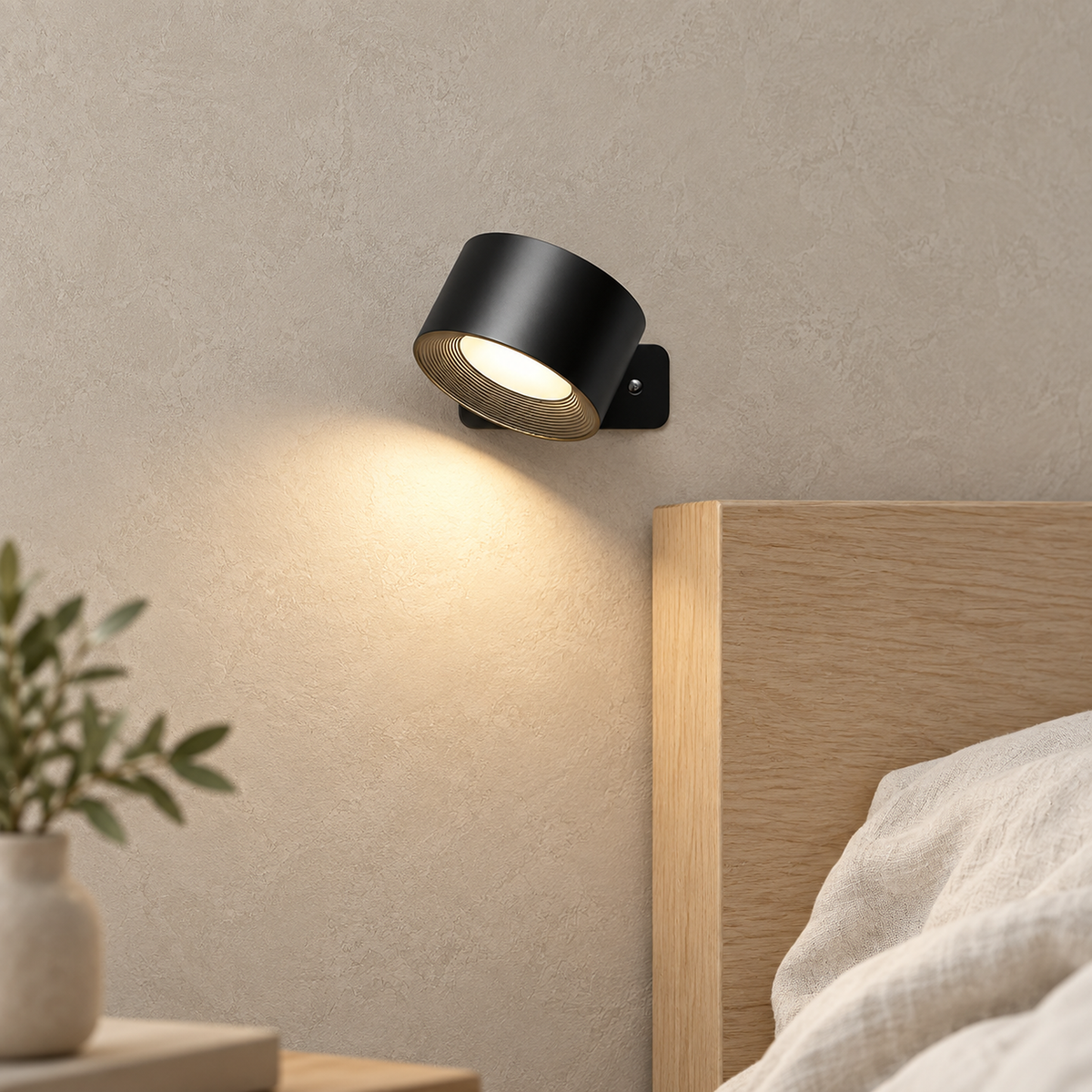


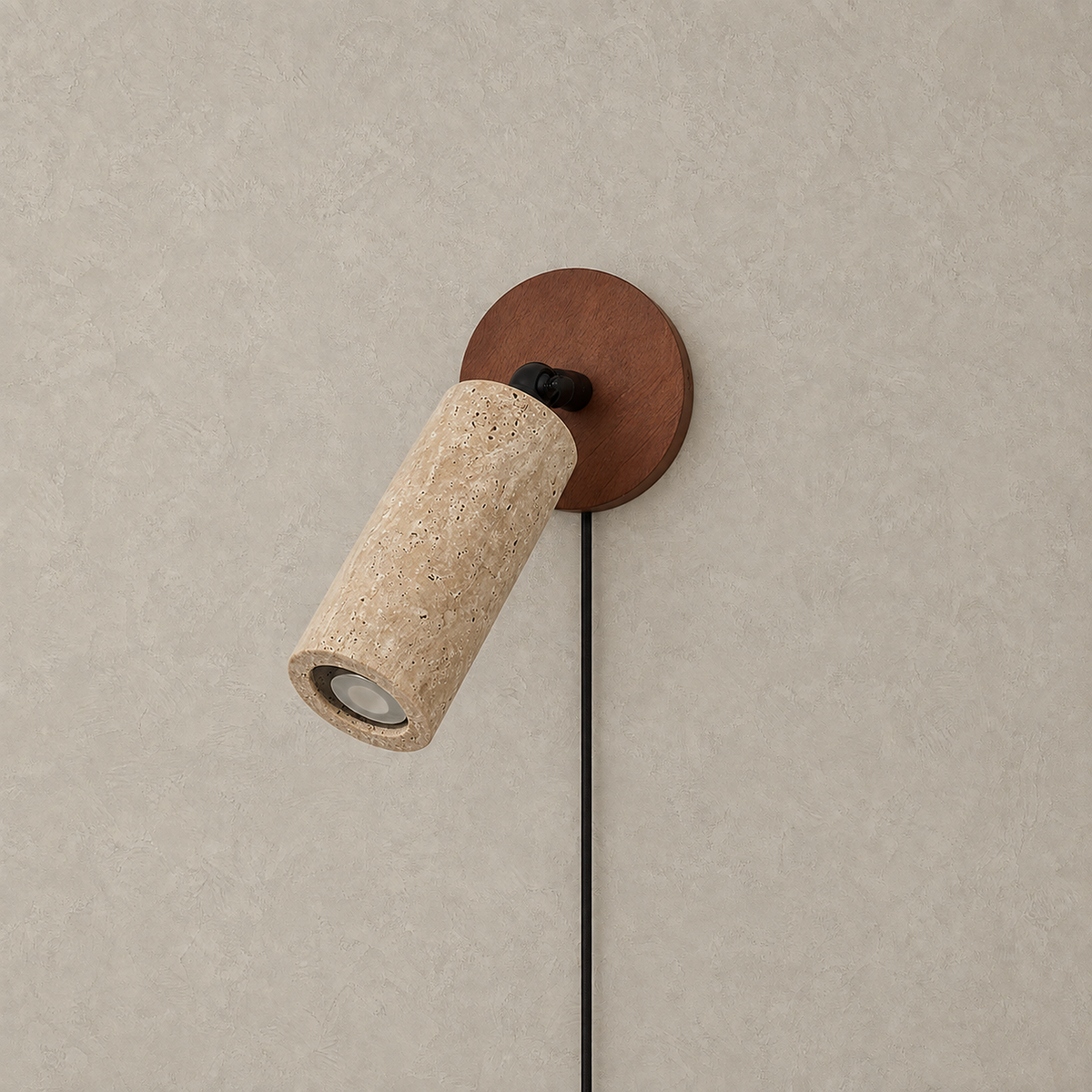
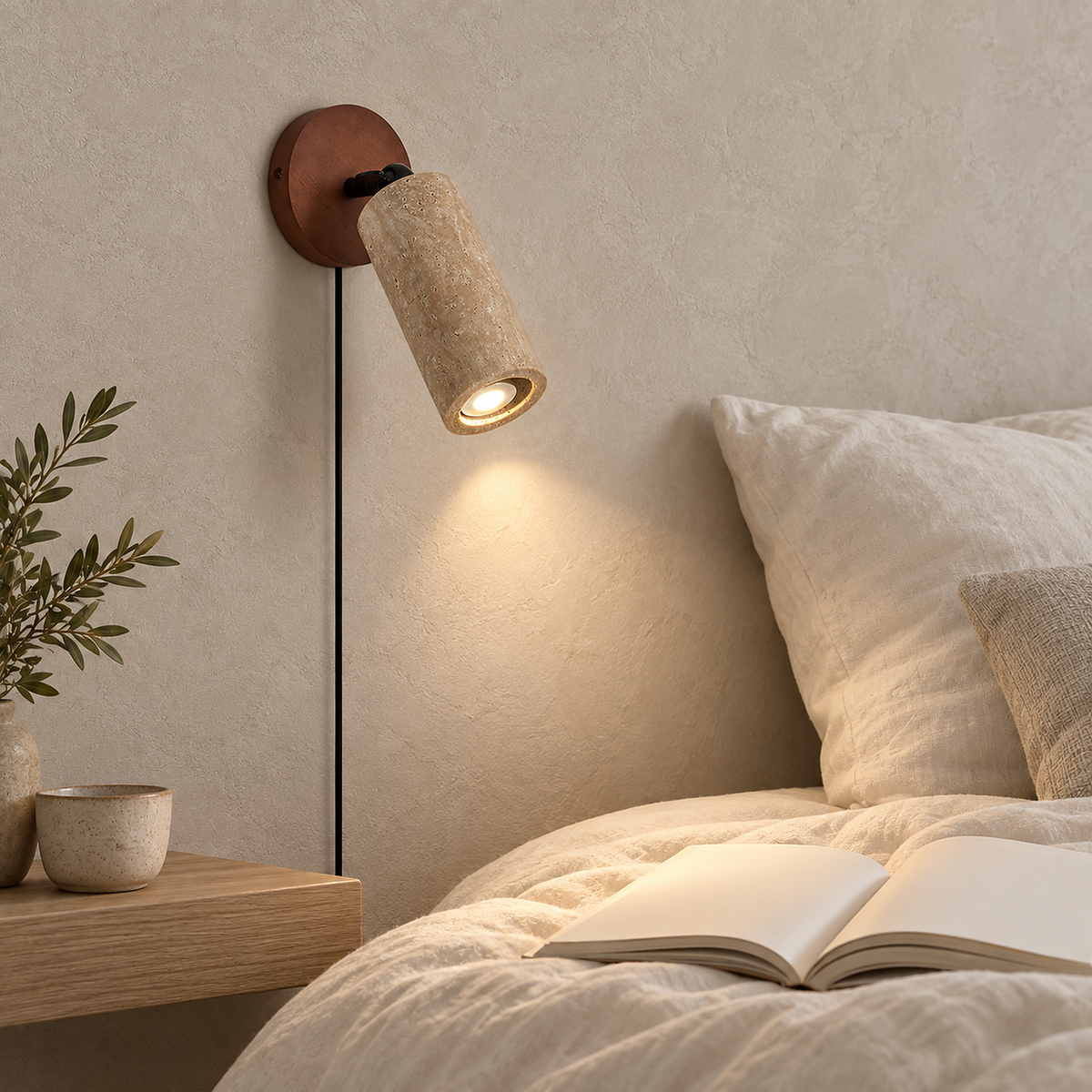


What a swing arm is, and what is actually here
The name comes from a jointed arm that folds out of the wall and carries the light with it. You swing it over a chair to read and fold it back afterwards. That is the original, and it is still what most people picture when they go looking for one.
What is gathered here is broader than that, and it is worth being straight about the difference. Some fixtures on this page have a jointed arm that folds out from the wall and back. Others have an arm that tilts but stays where it is. The rest move a head or a shade on the spot, with the fixture going nowhere.
Aiming the light is what puts a fixture on this page. Only the jointed arms move the light.
The three kinds of movement
A head on a ball joint. The most common arrangement here. A small head sits on a pivot and turns, in one case a full circle, so the beam drops onto a page, runs sideways along a wall or goes up into a corner. The fixture itself is often tiny, some of them only about three inches across.
A shade that rotates. A cylinder or a dome turns on its mount, so the same fixture lays light over a bed or sends it up the wall behind. Turning the shade changes the job rather than nudging the angle of a beam.
A jointed arm. The ones with a jointed arm fold in and extend out, so the light comes to you and the furniture stays where it is. It is the only kind that changes where the light is rather than only where it points.
Reach is the number almost nobody publishes
If the reason you want an arm is to get light over a chair or across a bed, reach is the specification that decides whether it works at all. It is also the one most often missing.
Many of these do not state how far they stand off the wall. Where the manufacturer does print it, a figure like 9.4 in (24 cm) is the one you want. The rest give a length, a height or a diameter, and those are different measurements that will not answer the question.
So do the measuring at your end. From the wall, how far out is your shoulder when you are sitting in the bed or the chair? If the answer is more than a few inches and the reach is not stated, plan for it to be short.
Why these are not bright, on purpose
A lot of these run at two or three watts, and the lumen figures on them are small. That sounds thin beside a ceiling light. It is not a shortcoming; it is the entire idea.
A small head aimed at a page puts nearly every lumen on the page. A large fixture washing the room has to be many times brighter to land the same light where you are reading, and it wakes the person next to you on the way. Aiming beats output beside a bed, which is where a reading light ends up.
Battery, plug or hardwired
Some of what is here runs on a rechargeable battery, and a few of those sit on an adhesive base that needs no drilling at all. Others plug into an outlet on a cord, and the rest are hardwired. The power line on the product page says which, where the manufacturer states it.
That split matters more here than on most pages. An adjustable light is one you will keep repositioning, and a cordless one can come off the wall and go somewhere else in a minute, while a hardwired one is a decision you make once.
Two ways to get more than one beam
Some of these are sold as a set of two small adjustable lamps, which is the straightforward answer for either side of a bed. Another design puts one, two or three adjustable heads on a single backplate, so two or three separate beams run off one fixture and one switch.
The two arrangements are not the same thing in use. A set of two gives each side of the bed its own light and its own switch. Several heads on one plate give you one switch and several beams, which suits a picture wall or a reading corner better than it suits a shared bed.
Before you order
Decide what has to move: the beam, or the light itself. The pivoting heads and rotating shades do the first; the jointed arms do the second.
Then measure out from the wall. That single number rules more of these in or out than anything else on the page.